
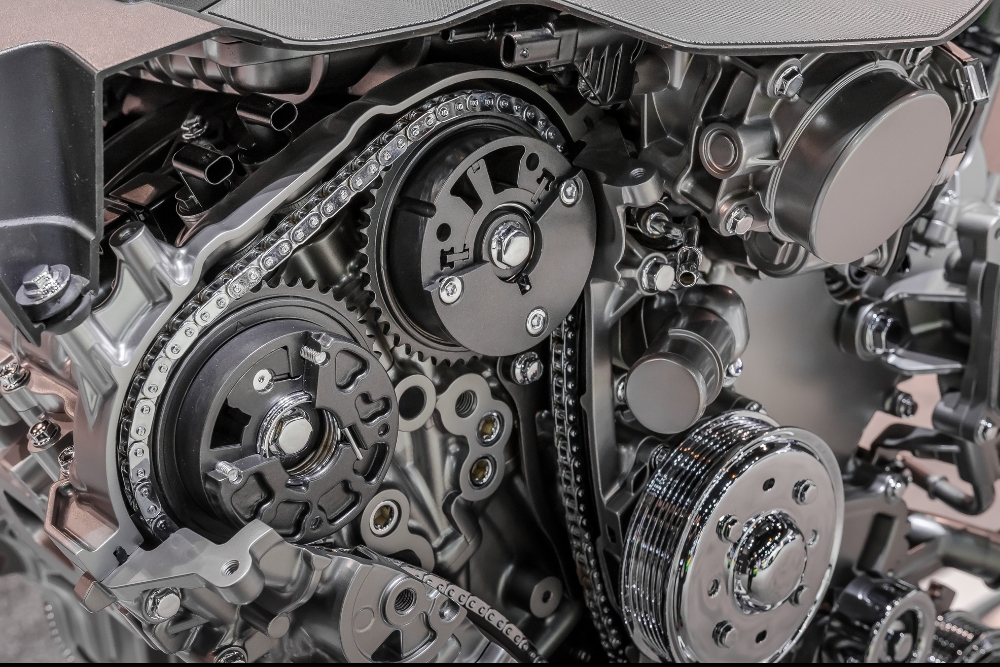
If your Audi has been rattling on cold starts, losing power, or showing check-engine timing codes, you may be facing two of the most common Audi repair issues: timing chain tensioner failure and carbon buildup. At MB Automotive Services in North Bethesda, MD, we specialize in Audi timing chain repair, carbon cleaning, and advanced diagnostics to protect your engine from costly damage. Our team delivers transparent, high-quality European auto care trusted by drivers throughout Rockville, Bethesda, Chevy Chase, Potomac, Gaithersburg, and Darnestown.
Why Timing Chain Tensioners Fail in Audis
Audi engines are engineered for precision. A failing timing chain tensioner, however, can lead to expensive complications, a reality we frequently see at MB Automotive Services, especially in 2.0T models. Understanding how the timing system works and why it becomes vulnerable will help you catch trouble before it becomes costly.
What the Timing Chain and Tensioner Do
- The timing chain synchronizes the crankshaft and camshaft, allowing valves to open and close at the correct moments.
- The tensioner maintains chain tension. If it fails, the chain may loosen or shift, leading to incorrect valve timing or mechanical damage.
Why Audis Are Vulnerable
- Many Audis use interference engine designs, so any slip in timing risks piston-to-valve contact.
- The 2.0T EA888 platform is especially prone to early tensioner and guide wear.
- Older OEM parts degrade over time, especially if not regularly maintained.
- Using low-grade oil or skipping changes further weakens tensioners. Quality synthetic oil and timely servicing make a big difference in preventing damage.
Symptoms of Timing Chain Problems
Knowing the warning signs can prevent small issues from turning into major engine failures. Here are symptoms we commonly diagnose at MB Automotive Services.
Engine Rattle or Clatter
A metallic rattle during cold starts is a classic early sign of timing chain wear. Even if the sound fades as the engine warms, it indicates slack in the timing chain that shouldn’t be ignored. Over time, that sound can worsen, leading to chain misalignment or skipping, which can cause serious engine damage.
Check Engine Light or Cam Timing Codes
Fault codes like P0016, P0011, or P0341 often appear when cam/crank timing is off, as the ECU detects misalignment and triggers the check engine light. Don’t ignore these codes; they often point to timing system issues that need immediate attention before they escalate into costly repairs.
Poor Performance or Rough Idle
You may notice hesitation or loss of power during acceleration, rough or uneven idle behavior, and inconsistent throttle response or stalling under load. When these symptoms appear alongside noise or a check engine light, timing chain issues are a strong possibility and should be diagnosed promptly.
Oil Leaks or Metal in Oil
Metal shavings may show up in your oil during a change, or leaks around the timing cover may develop as the timing system deteriorates. These signs suggest internal wear, guide damage, or a failing tensioner, and you should act quickly when spotted to prevent catastrophic engine failure.
Audi Timing Chain Repair: What to Expect
Repairing a timing chain isn’t simple. At MB Automotive Services, we use OEM-grade parts and factory-level diagnostic tools to perform repairs correctly and reliably.
Step 1: Diagnosis
- Use scan tools to read camshaft and crankshaft timing signals.
- Listen carefully for mechanical noise or chain slack.
- Inspect the chain, guide rails, and tensioner components.
We’ll present what we find clearly and give you repair options before proceeding.
Step 2: Replacement
- Replace the entire timing chain assembly.
- Install new guides, rails, and a hydraulic tensioner.
- Use only OEM or high-quality equivalent parts; no shortcuts allowed.
Step 3: Testing and Verification
- Reset the timing and clear all stored codes.
- Perform road tests and re-scan for timing accuracy.
- Show you the components removed so you see exactly what was failing.
If your Audi is making noise, hesitating, or running rough, these could be early signs of timing chain or carbon buildup issues. Don’t wait for it to get worse; call 301‑881‑8990 or schedule an expert diagnostic online with MB Automotive Services, proudly serving Audi drivers across Montgomery County.
Carbon Buildup in Audi Engines
Carbon buildup is a silent assailant in many modern Audi engines. Over time, deposits accumulate on intake valves and throttle components, diminishing performance and drivability.
Why It Happens
- Due to direct injection, fuel does not cleanse the intake valves as it would in port injection systems.
- Oil vapors and PCV gases adhere to the valve surfaces.
- Over time, these deposits harden into carbon, restricting airflow and altering combustion behavior.
Symptoms of Carbon Buildup
- Intermittent misfires
- Check engine light
- Hesitation or stumbling under acceleration
- Rough idle
- Noticeable decline in fuel economy
These symptoms often worsen gradually. If not addressed, they can escalate to more serious issues.
Severity Levels
- Light buildup: Mild hesitation, slight loss of response
- Moderate buildup: Frequent misfires, noticeable stalling
- Severe buildup: Valve sealing issues, major power loss, engine stalling
Cleaning Carbon Deposits: Methods That Work
There’s no one-size-fits-all fix for carbon buildup. The right method depends on engine condition, mileage, and symptoms.
Walnut Blasting
Walnut blasting is the industry-standard method for intake valve cleaning, where crushed walnut shells are sprayed onto intake valves to remove hardened deposits. This process safely lifts carbon without damaging metal surfaces and is best performed every 50,000–70,000 miles or sooner based on symptoms like misfires or rough idle.
Chemical Cleaners
Chemical cleaners are effective mainly for lighter deposits and offer a less invasive option, but they’re often insufficient for heavy buildup. They work best as maintenance between deeper cleans to help slow the accumulation of new carbon on intake valves.
Our Approach
At MB Automotive Services, we don’t cut corners when it comes to carbon cleaning:
- Remove the intake manifold: We gain full access to the intake valves, allowing us to work thoroughly without obstruction or shortcuts.
- Inspect and document valve condition: We take photos of what we find so you can see the severity of the buildup and understand exactly what needs attention.
- Use high-powered vacuum and blasting tools: We safely remove all carbon deposits without damaging sensitive engine components or valve surfaces.
- Verify results with scan data and test driving: We confirm that performance has been restored, misfires are gone, and your Audi is running smoothly again before returning it to you.
This meticulous process ensures the job is done right the first time.
Prevention Strategies for Audi Owners
Many Audi issues, such as timing chain wear or carbon buildup, can be prevented with smart, routine care. At MB Automotive Services, we teach owners how to protect their investment and avoid costly repairs.
Here are practical tips for drivers in North Bethesda, Bethesda, Chevy Chase, Potomac, Rockville, Gaithersburg, and Darnestown:
- Tensioner Wear: Use quality synthetic oil and stick to service intervals to keep your timing chain tensioner healthy and prevent premature failure.
- Chain Damage: React quickly if you hear rattling or tapping during cold starts, as this often signals timing chain slack that can worsen rapidly.
- Carbon Buildup: Schedule walnut blasting or cleaning around 50,000–70,000 miles to keep intake valves clean and maintain optimal engine performance.
- Fuel Quality: Always use top-tier gasoline to minimize carbon deposits and protect your direct injection system from buildup.
- Short-Trip Stress: Include longer highway drives to allow full engine heat cycles, which help burn off deposits and reduce moisture accumulation.
These basic steps can improve fuel economy, increase engine life, and keep your Audi running smoothly.
Why MB Automotive Services is the Right Shop for You
You deserve a shop that understands the complexity of German cars. Here’s why Audi owners trust us:
- European Vehicle Diagnostics: We use advanced diagnostic tools like ISCAN 3 and Autologic to accurately diagnose Audi and other European vehicles. All work is done in-house by technicians experienced with German and British automotive systems.
- Transparent Communication: We walk you through what’s wrong, how we’ll fix it, and show you the replaced parts. No surprises.
- Convenience You’ll Appreciate: We offer 5 VW Jetta loaner cars, shuttle service to the Metro, early drop-off/late-pickup, and efficient repair turnaround to keep you moving.
- Reliable Warranty Coverage: Every repair is backed by a 24-month/24,000-mile warranty via Bosch and TechNet to give you peace of mind.
- Locally Owned & Community-Focused: We’re not a franchise. We serve North Bethesda, Bethesda, Chevy Chase, Potomac, Rockville, Gaithersburg, and Darnestown. We’re your local shop, built on trust since 2005.
Our mission is clear: fix it right, keep it honest, and treat every customer with respect.
Frequently Asked Questions
Is Audi timing chain failure common?
Yes, timing chain failure is common in Audi 2.0T engines, especially due to weak tensioners and delayed oil changes. Early symptoms like engine rattle should be addressed quickly to avoid major engine damage.
How do you fix carbon buildup?
Carbon buildup is best fixed with walnut blasting, which removes deposits from intake valves. It restores airflow and performance, especially on direct-injection engines like Audi’s TFSI. Chemical cleaners can help, but are less thorough.
Why does my Audi burn oil?
Audis may burn oil due to worn piston rings, valve seals, or carbon buildup interfering with combustion. This is common in high-mileage engines. Regular monitoring and early diagnosis help reduce long-term damage.
How often should you clean carbon buildup in an Audi?
Carbon cleaning is recommended every 50,000 to 70,000 miles or sooner if symptoms emerge. Misfires, rough idle, and power loss are signs your intake valves likely need attention.
Book Your Audi Timing Chain or Carbon Cleaning Service Today
Is your Audi making unusual noises, hesitating when you accelerate, or losing power? These symptoms often signal serious issues like timing chain tensioner failure or carbon buildup on the intake valves, both of which worsen with time and mileage. At MB Automotive Services, we offer expert diagnostics, professional walnut blasting, timing chain repairs, and check engine light troubleshooting designed specifically for high-performance Audi engines.
Our experienced technicians use factory-level tools and OEM-quality parts to ensure every repair is done right the first time. Backed by a 24-month/24,000-mile warranty, our work is trusted by Audi drivers throughout North Bethesda, Chevy Chase, Potomac, Rockville, Gaithersburg, and Darnestown.
Visit us at 11874 Coakley Circle, North Bethesda, MD 20852, call 301‑881‑8990, or schedule your Audi service online today and experience transparent, high-quality care from your local European auto experts.