
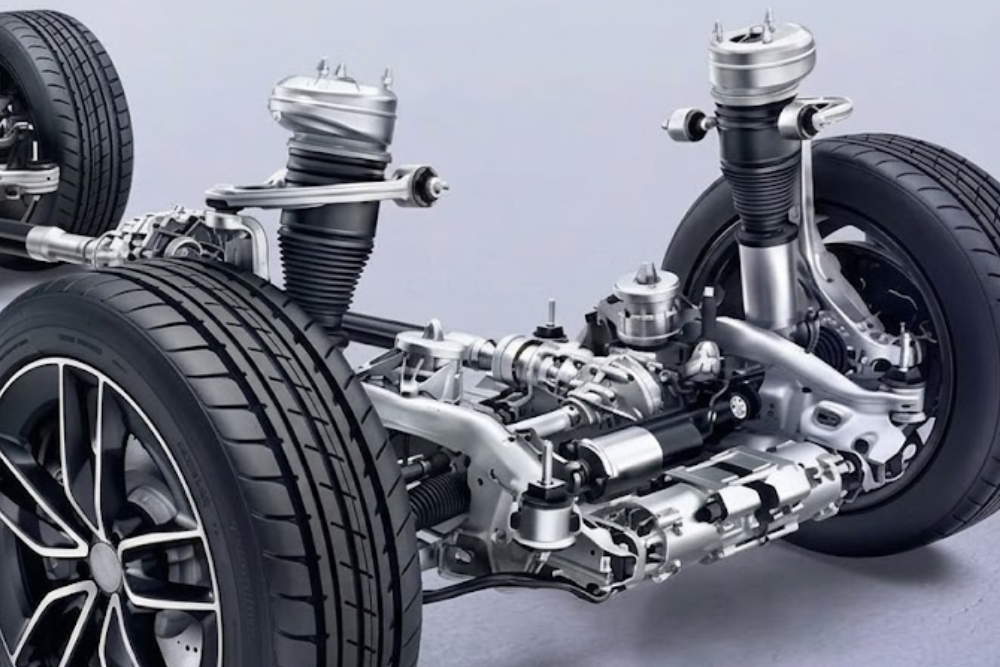
That corner sag is your AIRMATIC system telling you something has already failed. Mercedes AIRMATIC problems start small but move fast, and by the time most drivers notice the drop, the compressor has been overworking for weeks. The team at MB Automotive Services has been diagnosing and repairing these systems on German and British vehicles for over two decades, and we have seen what happens when the early signs get ignored. Below, we break down the most common failure points, what the warning signs actually mean, your real repair options, and how we approach every AIRMATIC job to make sure it does not come back.
What the AIRMATIC System Actually Does
The AIRMATIC system controls your vehicle’s ride height and comfort automatically. It uses a compressor to push air into rubber air struts at each corner of the vehicle. Sensors, solenoid valves, and an electronic control module work together to adjust pressure based on speed, load, and driving conditions. When one component fails, the system gets thrown off fast, which is why most owners notice something is wrong almost immediately. The car literally looks wrong from the outside.
The Most Common Mercedes AIRMATIC Failures in North Bethesda
Most AIRMATIC failures trace back to a handful of known weak points. These components wear out over time, and some fail faster depending on how the vehicle has been driven and maintained.
Air Strut Leaks
The air struts are the pressurized bags that hold the vehicle up at each corner. Over time, the rubber in these struts develops cracks, especially at the top and bottom folds. Once a leak starts, the compressor has to work harder and longer to maintain pressure. You will notice the vehicle sagging, particularly overnight or after sitting for several hours. In North Bethesda, the seasonal temperature swings between hot summers and cold winters accelerate this rubber degradation significantly.
Compressor Failure
The air compressor pumps air into the struts on demand. When struts are leaking, it runs more frequently than it was designed to, which leads to overheating and premature failure. A failed compressor means the system cannot refill and the vehicle drops to its lowest position. You may also hear a grinding or straining noise when it is struggling.
Solenoid Valve Problems
Each corner of the vehicle has a solenoid valve controlling airflow to that specific strut. When a valve fails to close properly, air bleeds out while the compressor fights to compensate. This typically causes the vehicle to lean or sit unevenly, even when the struts themselves are in decent condition.
Suspension Control Module Faults
The control module reads ride-height sensor data and tells the compressor and valves what to do. If it develops a fault, the system can behave erratically, raising and lowering at the wrong times or throwing a suspension warning that does not match any visible physical issue. Module faults are less common but do occur on older, high-mileage vehicles.
How to Tell If Your AIRMATIC Is Failing
You do not need a scan tool to spot the early signs. Most AIRMATIC problems show up visually and physically before any warning light appears.
Here are the most common signs drivers in the North Bethesda and Bethesda areas notice:
- Vehicle sits lower on one or more corners after being parked overnight
- A rough or bouncy ride that was not there before, especially on the highway
- The suspension warning light appearing on the instrument cluster
- An audible hissing sound near a wheel well when the vehicle is at rest
- The compressor running loudly or constantly when the engine is on
- Uneven tire wear caused by a corner sitting too low for extended periods
If you notice any combination of these, get the vehicle inspected as soon as possible. Driving on a collapsed strut puts added stress on surrounding suspension components and can damage the bump stop, control arms, and in some cases the wheel and tire.
Should You Repair the AIRMATIC or Convert to Coilovers in Bethesda?
This is where most owners have the most questions, and it is a fair one. When the AIRMATIC system fails, you have two primary paths: repair the original air suspension or convert it to a coilover or spring-based setup. Both options have real trade-offs.
| Factor | AIRMATIC Repair / Rebuild | Coilover Conversion |
|---|---|---|
| Ride Quality | Maintains factory comfort and adjustability | Firmer, fixed ride height |
| Upfront Cost | Higher for OEM-quality components | Lower initial investment |
| Long-Term Reliability | Rebuilt struts can last many years with proper parts | Coilovers are durable and low-maintenance |
| Resale Value | Keeps the vehicle closer to factory specifications | May reduce resale value on luxury models |
| Warning Lights | None if all components are repaired correctly | Suspension warning lights may remain active |
| Best For | Owners keeping the vehicle long-term | Owners focused on reducing future suspension costs |
Repairing the AIRMATIC components preserves the ride quality and keeps the vehicle at factory spec. This is the better option for owners who plan to keep their vehicle for several more years and want to maintain its character and resale value. Conversion kits eliminate the air suspension entirely, which avoids future compressor and strut costs but changes the way the vehicle drives and may leave warning lights on permanently.
What a Proper AIRMATIC Repair Looks Like in Our Shop
A thorough AIRMATIC repair is not just replacing the obvious failed part. At MB Automotive Services, we use Autel, Autologic, and ISCAN diagnostic equipment, which allows us to communicate directly with the suspension control module and read live data from each corner sensor. This matters because a leaking strut is often just the visible part of a larger problem: the compressor may have been damaged by overwork, or a solenoid may be contributing to the pressure loss.
A proper repair process includes:
- Reading fault codes from the suspension control module
- Pressure testing each corner to identify active and slow leaks
- Inspecting the compressor for signs of overheating or wear
- Testing solenoid valves for correct operation
- Replacing confirmed failed components with quality parts
- Re-leveling and road-testing to verify the system holds pressure and rides correctly
Skipping any of these steps risks a repeat failure within months. The full-system approach is what keeps our customers from Potomac, Chevy Chase, and surrounding areas coming back.
Ready to get your Mercedes suspension checked by a team that knows these vehicles? Reach out to MB Automotive Services at 11874 Coakley Cir., North Bethesda, MD 20852 or call 301-881-8990. Drivers searching for Mercedes suspension repair near North Bethesda trust us to get it right the first time.
Why Drivers Near North Bethesda Choose MB Automotive Services
We do not work on every car that comes through the door. MB Automotive Services focuses exclusively on German and British vehicles, and that specialization makes a real difference when it comes to complex systems like AIRMATIC.
- German and British Vehicle Specialists: Mercedes, BMW, Porsche, Land Rover, Range Rover, Jaguar, VW, and Audi.
- Advanced European Diagnostic Tools: Autel, ISCAN 3, Autologic, and factory diagnostic tools for direct control module communication and live sensor data.
- 24-Month/24,000-Mile Warranty: Every repair is covered for long-term peace of mind.
- Full Transparency on Every Job: We walk you through what was found, what was replaced, and why. We show you the old parts.
- Shuttle Service to the Metro: Drop your car off and get back to your day.
- NASTF Key Replacement Certified, serving German and British vehicles across North Bethesda and the surrounding areas.
We serve a wide range of areas, including Bethesda, featuring neighborhoods like Wildwood, Edgemoor, and West End. We also service North Bethesda, Chevy Chase, Potomac, Rockville, Gaithersburg, and Darnestown.
Frequently Asked Questions About Mercedes AIRMATIC Problems
How do I know if my AIRMATIC is failing?
The most common signs are a vehicle that sags at one or more corners after sitting, a constantly running compressor, a rough ride, or a suspension warning light on the dash. Catching it early prevents more expensive secondary damage.
Can AIRMATIC be repaired?
Yes. Individual components such as air struts, the compressor, solenoid valves, and ride-height sensors can all be repaired or replaced without converting the vehicle to a different suspension type. Repair preserves the factory ride quality and keeps warning lights off.
What does AIRMATIC replacement cost?
Costs vary widely based on which components have failed and the age of the vehicle. A single strut replacement is far less expensive than a full system rebuild with a new compressor. Contact MB Automotive Services for an accurate diagnosis and estimate based on your vehicle’s condition.
What happens if I ignore a sagging AIRMATIC suspension?
Driving on a collapsed or under-pressurized air strut accelerates wear on control arms, ball joints, and tires. Left long enough, a suspension problem can lead to alignment damage and unsafe handling, especially at highway speeds common on I-270 and the Beltway.
Schedule Your Mercedes Suspension Repair in North Bethesda Today!
If your Mercedes is sagging, throwing a suspension warning, or riding rougher than it used to, do not wait for the problem to compound into a larger repair bill. At MB Automotive Services, we bring over two decades of exclusive German and British vehicle experience to every AIRMATIC job we take on.
We diagnose the full system, repair what actually failed, and back our work with a 24-month/24,000-mile warranty. Visit us at 11874 Coakley Cir., North Bethesda, MD 20852 or call 301-881-8990 to schedule.